
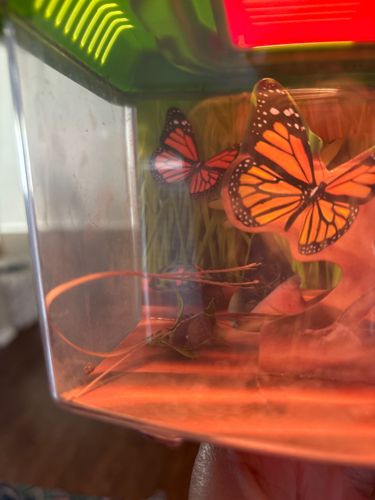
Monarch butterfly
Danaus plexippus
- Order & Family
- Lepidoptera, Nymphalidae
- Size
- Wingspan typically ranges from 3.7 to 4.1 inches (8.9 to 10.2 cm).
Natural Habitat
Found across North, Central, and South America, as well as several Pacific islands, Australia, and Western Europe; typically located in areas with milkweed and sufficient nectar sources such as fields, meadows, and gardens.
Diet & Feeding
Larvae (caterpillars) feed exclusively on milkweed (Asclepias spp.). Adults feed on nectar from a variety of flowers.
Behavior Patterns
Best known for their incredible long-distance annual migration from North America to overwintering sites in central Mexico and coastal California; they undergo a complete metamorphosis with four stages: egg, larva, pupa, and adult.
Risks & Benefits
Benefits the ecosystem as an important pollinator; toxins sequestered from milkweed during the larval stage make both caterpillars and adults unpalatable and potentially toxic to predators like birds. They pose no significant risk to humans.