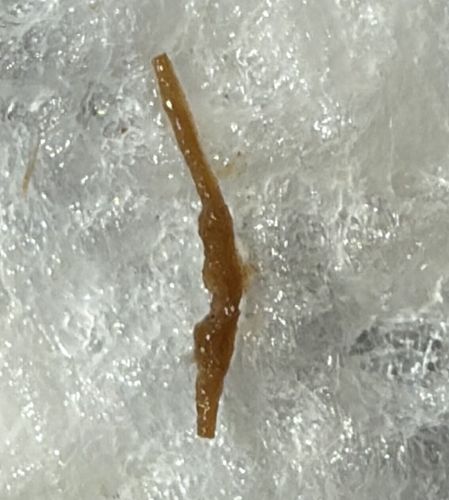
Earthworm (specifically a dehydrated or juvenile specimen)
Scientific Name: Lumbricus terrestris (representative species)
Order & Family: Order Opisthopora, Family Lumbricidae
Size: 10 mm up to 360 mm depending on age and species (specimen appears to be a small juvenile or fragment).
Natural Habitat
Moist soil rich in organic matter, leafy debris, and gardens; often surface during heavy rain.
Diet & Feeding
Detritivorous; They consume organic matter in soil, including decaying leaves, roots, and microorganisms.
Behavior Patterns
Nocturnal and subterranean; they use peristaltic contractions to move and are essential for soil aeration and nutrient cycling.
Risks & Benefits
Extremely beneficial for ecosystems by improving soil structure and fertility; generally pose no risk to humans or pets.
Identified on: 3/12/2026