
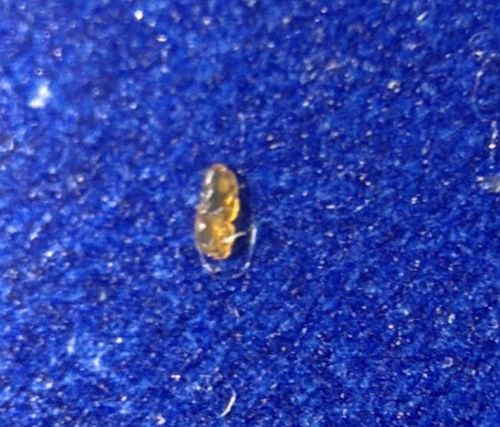
Bed Bug (nymph casing/molt)
Cimex lectularius
- Order & Family
- Order: Hemiptera, Family: Cimicidae
- Size
- 1 mm to 5 mm (adults are larger; the pictured casing likely represents an early nymph stage, around 1-2 mm).
Natural Habitat
Typically found indoors in close proximity to human sleeping areas, residing in mattress seams, box springs, bed frames, headboards, and cracks in walls or flooring.
Diet & Feeding
Hematophagous (feeds exclusively on blood), primarily human blood, usually feeding at night while the host sleeps.
Behavior Patterns
Nocturnal and elusive; they hide in tight crevices during the day. They go through five nymphal stages, shedding their skin (distinctive translucent casings like the one pictured) at each stage before reaching adulthood.
Risks & Benefits
Risks: Their bites cause itchy, red welts and can lead to secondary skin infections, allergic reactions, anxiety, and insomnia. They are notorious pests that are difficult and expensive to eradicate. Benefits: None known for humans or the general household ecosystem.