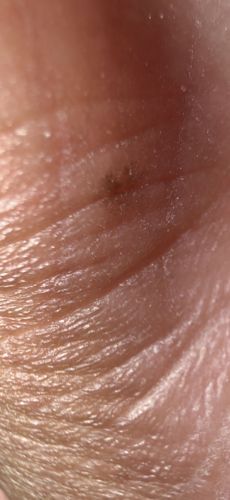
Scabies Mite (Suspected)
Scientific Name: Sarcoptes scabiei var. hominis
Order & Family: Order: Sarcoptiformes, Family: Sarcoptidae
Size: Microscopic; adult females are typically 0.30–0.45 mm long and 0.25–0.35 mm wide, while males are slightly smaller.
Natural Habitat
The epidermis (outer layer) of human skin, particularly in areas like between fingers, wrists, elbows, and armpits.
Diet & Feeding
Feeds on dissolved human tissue and skin cells while burrowing under the skin.
Behavior Patterns
Burrows into the upper layer of the skin to live and lay eggs. The mites are most active at night, which is when itching is often most intense.
Risks & Benefits
Risks: Causes scabies, a highly contagious skin infestation characterized by intense itching and a pimple-like rash. Secondary bacterial infections can occur from scratching. Not beneficial.
Identified on: 2/22/2026