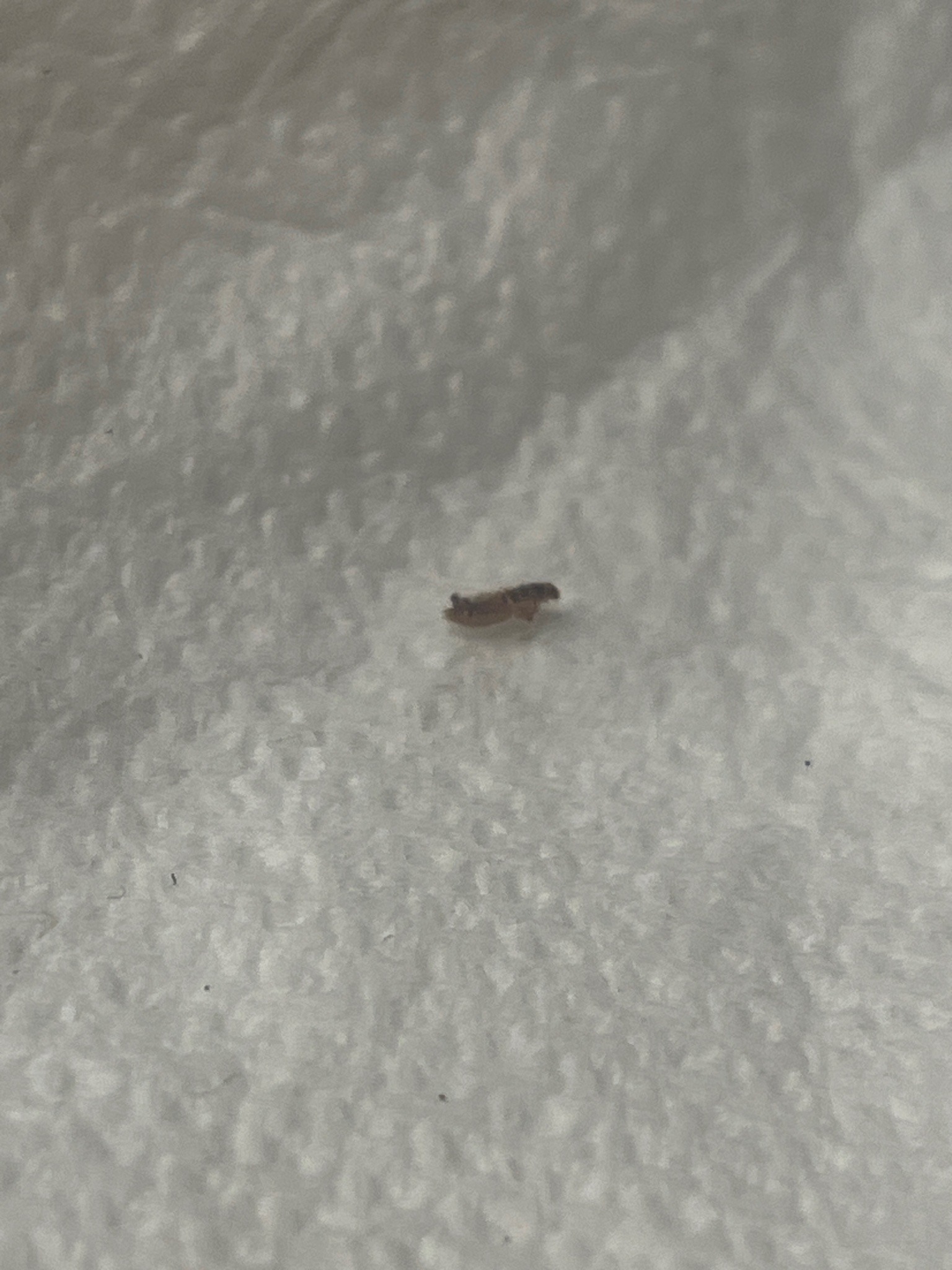
Cat Flea
Scientific Name: Ctenocephalides felis
Order & Family: Order: Siphonaptera, Family: Pulicidae
Size: 1.5 to 3.3 mm in length
Natural Habitat
Domestic environments, specifically inhabiting the fur of mammals or nesting in carpets, bedding, and floor cracks.
Diet & Feeding
Obligate hematophagy; adults feed exclusively on the blood of mammals (primarily cats and dogs, but will bite humans). Larvae feed on organic debris and adult flea feces.
Behavior Patterns
Known for exceptional jumping ability and a laterally flattened body for moving through hair. They undergo complete metamorphosis (egg, larva, pupa, adult) and are active year-round in indoor environments.
Risks & Benefits
Significant veterinary and medical pest. Risks include severe allergic dermatitis, transmission of tapeworms (Dipylidium caninum), and potential transmission of bacterial pathogens like Bartonella henselae (cat-scratch disease).
Identified on: 6/4/2026