
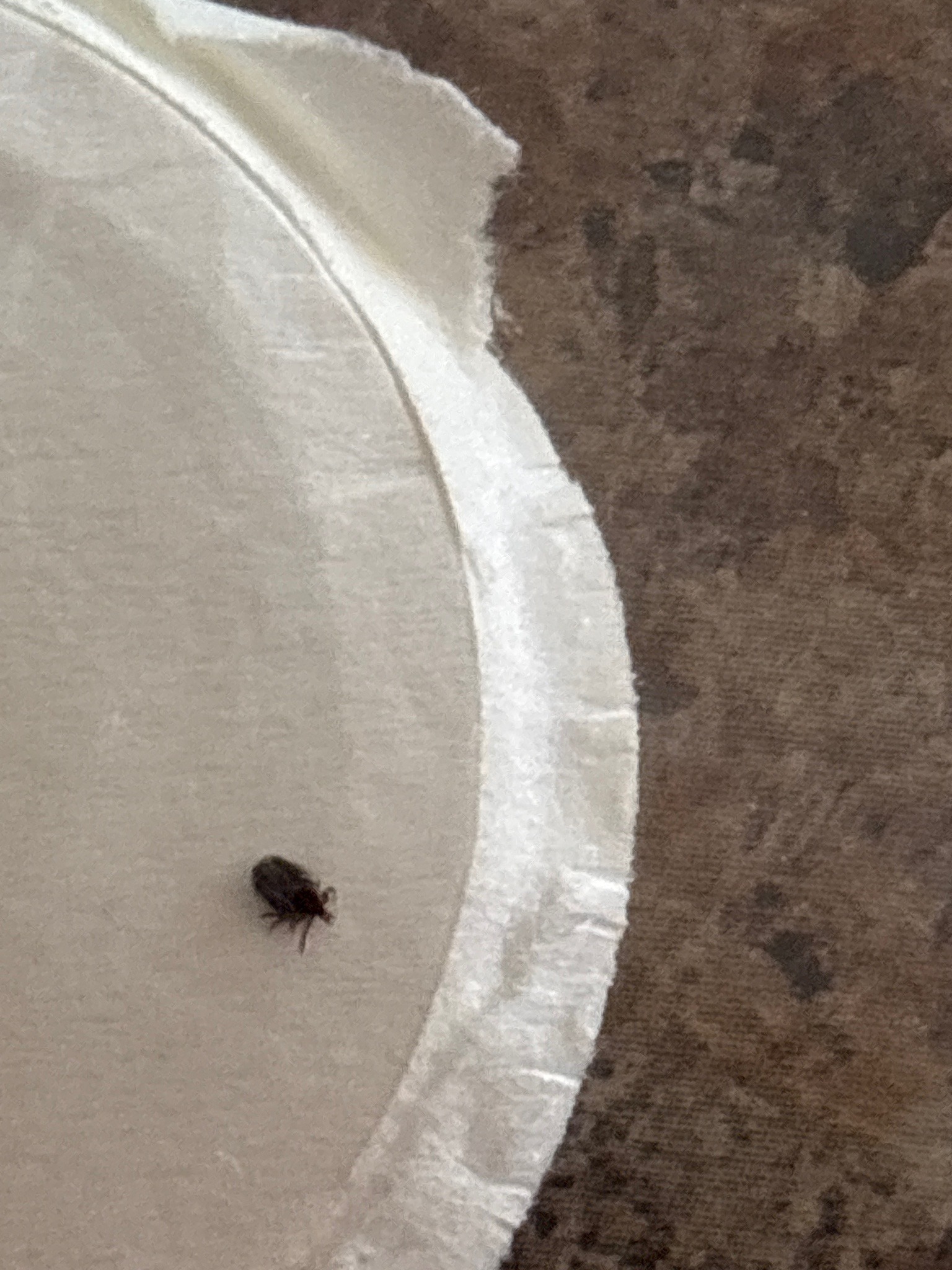
Community identification
American Dog Tick
Dermacentor variabilis
- Order & Family
- Ixodida, Ixodidae
- Size
- 3 mm to 5 mm (unfed adult), up to 15 mm (engorged female)
Natural Habitat
Areas with little or no tree cover, such as grassy fields, walkways, and trails, as well as woodlots with tall grass and shrubs.
Diet & Feeding
Hematophagous; they feed on the blood of mammals, including humans, dogs, and livestock.
Behavior Patterns
They exhibit 'questing' behavior by climbing to the tips of vegetation and waiting for a host to brush by. They have a three-host life cycle (larva, nymph, and adult) that usually takes two years to complete.
Risks & Benefits
They are known vectors of Rocky Mountain spotted fever and tularemia. They can also cause tick paralysis in both dogs and humans. They generally lack ecological benefits to humans but serve as food for certain birds and small mammals.