
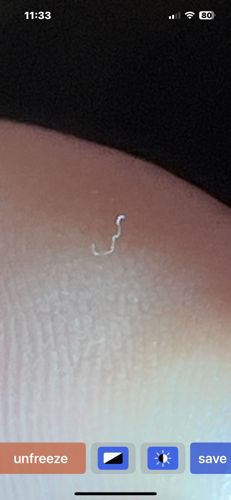
Community identification
Pinworm
Enterobius vermicularis
- Order & Family
- Order: Oxyurida, Family: Oxyuridae
- Size
- 2 to 13 mm (females are larger, approximately 8-13 mm long and thread-like).
Natural Habitat
Human gastrointestinal tract, primarily the large intestine and rectum; eggs can survive on surfaces like bedding, clothing, and toys.
Diet & Feeding
Content of the human host's intestine; they do not feed on blood or tissue.
Behavior Patterns
Nocturnal migration where gravid females travel to the perianal area to deposit eggs; eggs become infectious within hours and are spread via the fecal-oral route.
Risks & Benefits
Risks include intense itching (pruritus ani), secondary bacterial infections from scratching, and irritability. They provide no known ecological benefits and are considered a common human parasite.