
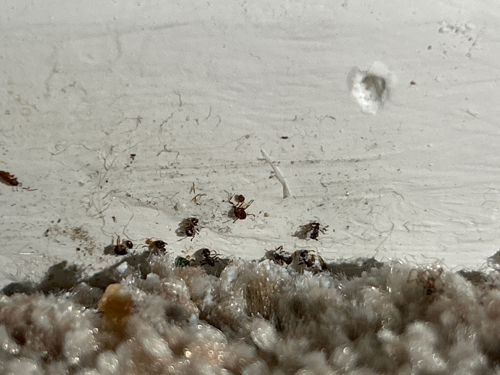
Ants
Formicidae (Family)
- Order & Family
- Hymenoptera, Formicidae
- Size
- Typically 2 to 20 mm, depending on the species.
Natural Habitat
Ants are highly adaptable and can be found in almost every terrestrial habitat. They build nests in soil, under rocks, in wood, and sometimes inside human structures.
Diet & Feeding
Ants are omnivores and their diet can vary significantly by species. They feed on nectar, seeds, fungi, insects (both living and dead), and human food scraps. Many species are scavengers.
Behavior Patterns
Ants are social insects that live in colonies, which can range from a few dozen to millions of individuals. They exhibit complex social structures with specialized roles (queen, workers, soldiers). They communicate through pheromones, engage in foraging, nest building, and care for their young. Some species form trails to guide others to food sources.
Risks & Benefits
Potential risks include property damage (some species like carpenter ants can damage wood), contamination of food, and painful stings or bites from certain species (e.g., fire ants). On the beneficial side, ants play a crucial role in ecosystems as decomposers, aerating soil, and acting as biological pest control by predating on other insects. Some species also aid in seed dispersal.