
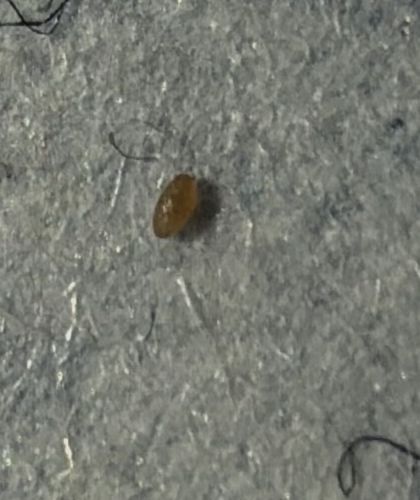
Carpet Beetle (Egg/Larva Stage)
Anthrenus verbasci (Varied Carpet Beetle) or Attagenus unicolor (Black Carpet Beetle)
- Order & Family
- Coleoptera; Dermestidae
- Size
- Eggs are microscopic to barely visible (approx. 0.25mm - 0.5mm). Larvae range from 4mm to 8mm depending on species and maturity.
Natural Habitat
Typically found indoors in dark, undisturbed areas such as under furniture, in closets, along baseboards, and in stored woolens or pantry goods. They thrive in homes, museums, and warehouses.
Diet & Feeding
Larvae feed on natural animal fibers like wool, silk, fur, leather, and feathers, as well as dead insects, pet hair, and occasionally stored dried food products. Adults feed on pollen and nectar outdoors.
Behavior Patterns
The image likely shows an egg or very early stage pupa/larva casing. They have a complete metamorphosis (egg, larva, pupa, adult). The larvae avoid light and are the destructive stage, chewing irregular holes in fabrics. Adults are attracted to light and often found near windows.
Risks & Benefits
Risks: The larvae are a significant household pest that can cause extensive damage to clothing, carpets, upholstery, and museum specimens. Some people experience 'carpet beetle dermatitis,' an allergic reaction to larval hairs. Benefits: In the wild, they act as decomposers of dead animal matter.