
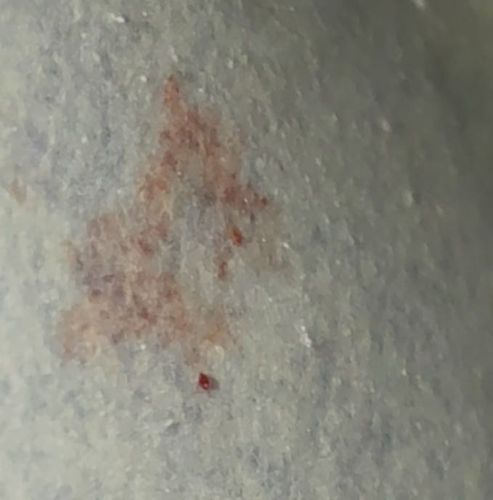
Chigger (Larval Trombiculid Mite)
Trombiculidae (Family) - various genera like Eutrombicula
- Order & Family
- Order: Trombidiformes; Family: Trombiculidae
- Size
- Microscopic at the larval stage (approx. 0.15 to 0.3 mm); barely visible to the naked eye as a tiny red speck.
Natural Habitat
Found in tall grass, weeds, berry patches, and woodland edges; they thrive in moist, shaded environments with low-hanging vegetation.
Diet & Feeding
Larvae are parasitic, feeding on the skin cells of animals and humans (they do not burrow or suck blood, but inject enzymes to liquefy skin tissue). Adults feed on distinct plant materials or small arthropods.
Behavior Patterns
Larvae crawl onto hosts from vegetation, usually congregating in tight areas like waistbands, sock lines, or armpits. They bite, inject digestive enzymes, feed on the liquefied tissue, then drop off to molt into nymphs.
Risks & Benefits
Risks: Their bites cause intense, persistent itching and red welts (often called chigger dermatitis). In some parts of Asia, they can transmit scrub typhus. Benefits: As adults, they may prey on other small pest insects, contributing to ecological balance.