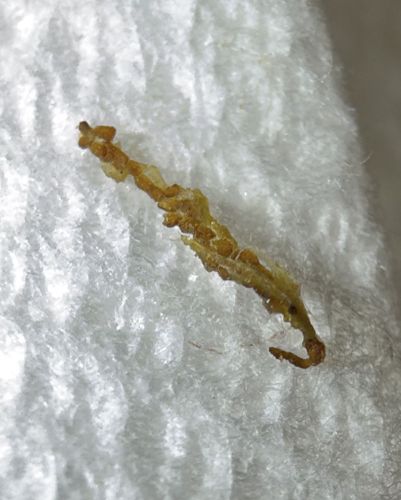
Tapeworm proglottid
Scientific Name: Dipylidium caninum (likely, given typical pet tapeworms)
Order & Family: Order: Cyclophyllidea, Family: Dipylidiidae
Size: Proglottids are typically 3-10 mm long, resembling a grain of rice or a cucumber seed when dried.
Natural Habitat
Intestines of canine and feline hosts. Segments (proglottids) are often found in feces, around the anus of infected animals, or where the animal sleeps.
Diet & Feeding
Adult tapeworms absorb nutrients directly through their tegument from the host's intestinal contents.
Behavior Patterns
The tapeworm grows by adding segments (proglottids) from the neck. Mature proglottids, containing egg packets, detach and migrate out of the host's anus or are passed in feces. Upon drying out in the environment, they release eggs.
Risks & Benefits
Risk: Parasitic infection in pets, leading to perianal irritation (scooting), poor coat condition, and sometimes mild weight loss. Rarely, humans (usually children) can become infected by accidentally ingesting an infected flea. No benefits to humans or pets.
Identified on: 3/9/2026