
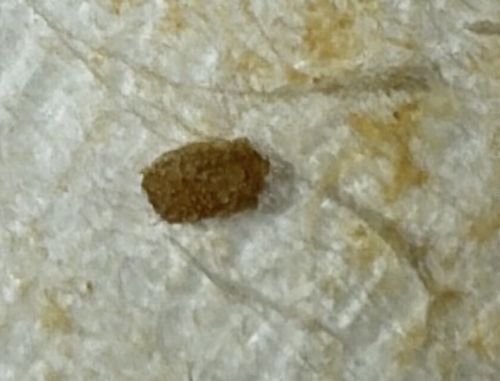
Household Casebearer (often specifically the Plaster Bagworm or similar Case-bearing Cloths Moth larva)
Phereoeca uterella (Plaster Bagworm) or Tinea pellionella (Case-bearing Clothes Moth)
- Order & Family
- Order: Lepidoptera, Family: Tineidae
- Size
- Larval case is typically 8-13 mm (0.3-0.5 inches) long.
Natural Habitat
Found indoors in homes, typically in dark, humid corners, underneath furniture, closets, garages, and on stucco or plaster walls.
Diet & Feeding
The larvae feed on keratin found in natural fibers (wool, silk), spider webs, hair, lint, dead insects, and dried animal skin.
Behavior Patterns
The larva constructs a flattened, pumpkin-seed-shaped protective case out of silk and debris (sand, soil, frass, paint fragments). It drags this case around as it moves. Before pupating, they often climb walls or hang from ceilings.
Risks & Benefits
Generally considered a pest. They do not bite or sting humans, but they can damage clothing, rugs, and upholstery made of natural fibers. They are indicators of high humidity or dusty conditions.