
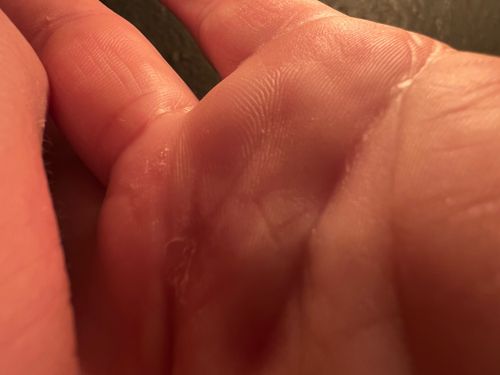
Community identification
Itch mite (Scabies mite)
Sarcoptes scabiei
- Order & Family
- Order: Sarcoptiformes, Family: Sarcoptidae
- Size
- Microscopic; females are approximately 0.30–0.45 mm long, while males are about half that size.
Natural Habitat
Human skin, specifically within the stratum corneum (the outermost layer of the epidermis).
Diet & Feeding
The mites feed on skin cells and intercellular fluid by dissolving the tissue as they burrow.
Behavior Patterns
The female mite burrows into the skin to lay eggs, creating 'tunnels' or burrows. This triggers a delayed hypersensitivity reaction (allergic reaction) resulting in intense itching.
Risks & Benefits
Risks include intense itching (pruritus), skin rashes, and secondary bacterial infections from scratching. It is highly contagious through skin-to-skin contact. There are no ecological benefits to this parasite.