
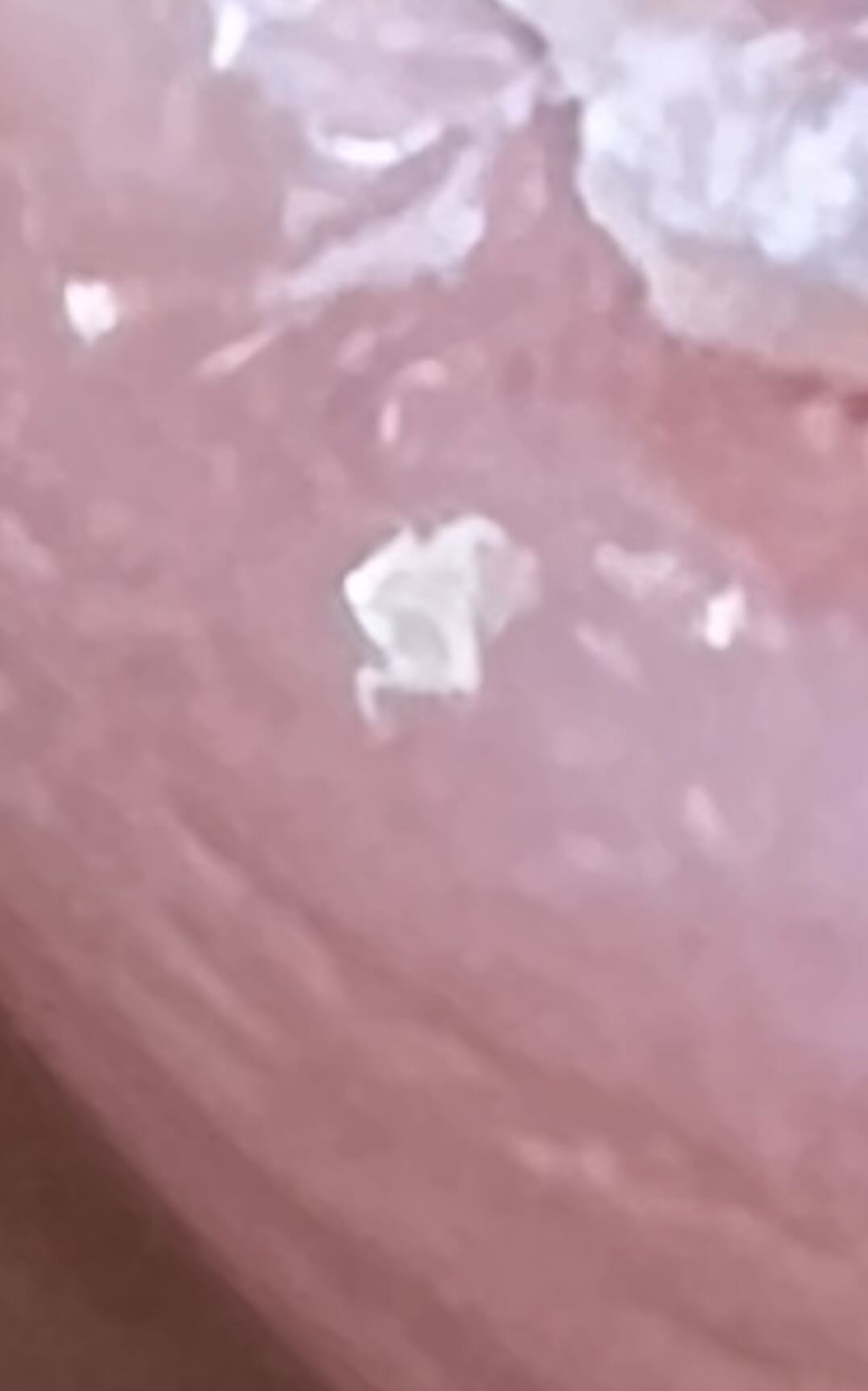
Community identification
Human Scabies Mite
Sarcoptes scabiei var. hominis
- Order & Family
- Order: Sarcoptiforms, Family: Sarcoptidae
- Size
- Adult females are approximately 0.30–0.45 mm long; males are about half that size (virtually invisible to the naked eye).
Natural Habitat
The epidermis (outer layer) of human skin; they burrow deep into the skin to live and deposit eggs.
Diet & Feeding
The mites feed on skin cells and dermal fluids created by the body's reaction to their presence.
Behavior Patterns
Life cycle includes egg, larva, nymph, and adult stages. Females burrow into the skin using their mouthparts and front legs, creating characteristic winding tunnels where they spend their lives.
Risks & Benefits
Risks: Causes scabies, a highly contagious skin infestation characterized by intense itching and a pimple-like rash. Untreated infestations can lead to secondary bacterial infections from scratching. There are no ecological benefits to humans.