
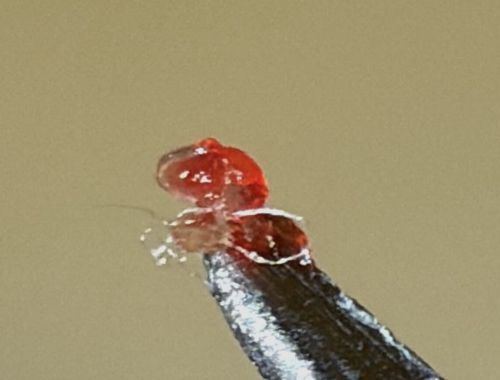
Red Spider Mite (specifically looks like a predatory mite or a pest like the Two-Spotted Spider Mite in a specialized red phase, but often colloquially called Red Spider Mite)
Tetranychus urticae (commonly) or Phytoseiulus persimilis (if predatory)
- Order & Family
- Order: Trombidiformes; Family: Tetranychidae (for pests) or Phytoseiidae (for predators)
- Size
- Extremely small, typically 0.4 mm to 0.5 mm in length (barely visible to the naked eye without magnification).
Natural Habitat
Found worldwide in hot, dry conditions; commonly resides on the undersides of leaves on a vast variety of plants, including houseplants, agricultural crops, and ornamental flowers.
Diet & Feeding
Plant-feeding varieties pierce plant cells and suck out the contents causing yellow stippling; Predatory varieties (like Phytoseiulus) feed on other mites.
Behavior Patterns
They are prolific weavers of fine silk webbing (hence 'spider' mite). They reproduce rapidly in warm, dry weather, moving from plant to plant via wind currents or physical contact.
Risks & Benefits
Risks: Major agricultural and garden pest capable of killing plants by draining their nutrients and inhibiting photosynthesis. Benefits: Predatory species are beneficial biological control agents used to eat pest mites.