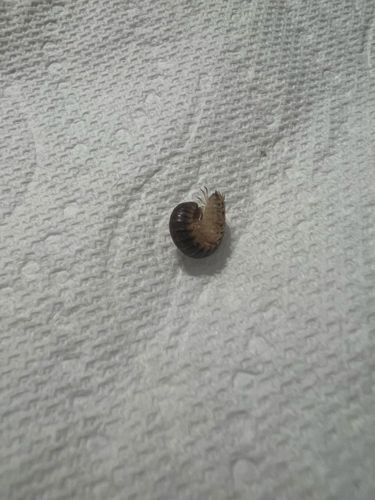
Millipede
Scientific Name: Class Diplopoda (likely Order Julida)
Order & Family: Order Julida / Families vary (e.g., Julidae or Parajulidae)
Size: Typically 1 to 2 inches (2.5 to 5 cm) for common North American species, though they vary globally.
Natural Habitat
Damp environments such as leaf litter, mulch, under rocks, rotting logs, and occasionally inside homes in basement or ground-floor areas.
Diet & Feeding
Detritivores; they primarily eat decaying organic matter, rotting leaves, and occasional fungal growth.
Behavior Patterns
They are slow-moving scavengers that coil into a tight spiral when threatened to protect their soft underside. They are nocturnal and depend on high moisture levels to survive.
Risks & Benefits
They are ecologically beneficial as decomposers that enrich soil. They pose no direct risk to humans (they do not bite or sting), though some species can secrete a mild defensive liquid that may irritate skin or eyes if handled.
Identified on: 1/6/2026