
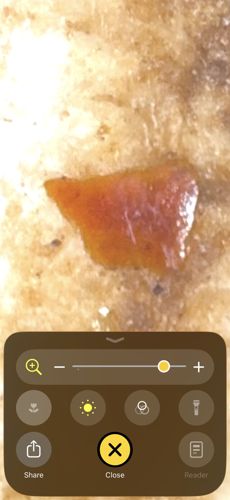
Community identification
Bed Bug (Exuviae/Casing)
Cimex lectularius
- Order & Family
- Order: Hemiptera, Family: Cimicidae
- Size
- Nymphs are 1.5mm to 4.5mm; adults are 5mm to 7mm (this image likely shows a cast skin or nymph stage).
Natural Habitat
Commonly found in human dwellings, specifically in cracks and crevices near sleeping areas such as mattresses, bed frames, and baseboards.
Diet & Feeding
Obligate hematophages, meaning they feed exclusively on the blood of warm-blooded animals, primarily humans.
Behavior Patterns
They are nocturnal, emerging at night to feed. They undergo incomplete metamorphosis (egg, nymph, adult) and must shed their exoskeleton (molt) to grow into the next stage.
Risks & Benefits
Risks include itchy skin rashes, psychological distress, and allergic reactions. They are not known to transmit diseases to humans but are considered a significant public health pest. There are no ecological benefits to their presence in human homes.