
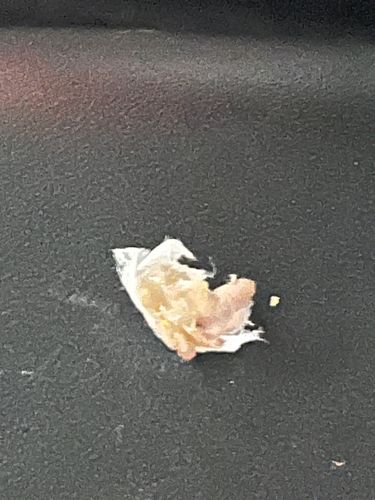
Brown widow spider egg sac
Latrodectus geometricus
- Order & Family
- Araneae, Theridiidae
- Size
- Egg sac: approximately 10 mm in diameter; Adult females: body length 7–10 mm (excluding legs).
Natural Habitat
Commonly found in dark, secluded areas such as under patio furniture, in eaves, woodpiles, and corners of garages or sheds.
Diet & Feeding
The adult spider is carnivorous (insectivorous), feeding on a variety of flies, beetles, moths, and other small arthropods.
Behavior Patterns
Unlike the smooth egg sacs of black widows, brown widow sacs are distinctive for their spiky or 'tufted' appearance. They exhibit a solitary lifestyle and are generally less aggressive than black widows, often retreating when disturbed.
Risks & Benefits
The venom of a brown widow is neurotoxic, but they typically inject less venom than black widows, making their bites less medically significant for humans, though still painful. Benefit: they provide natural pest control by eating common household and garden insects.