
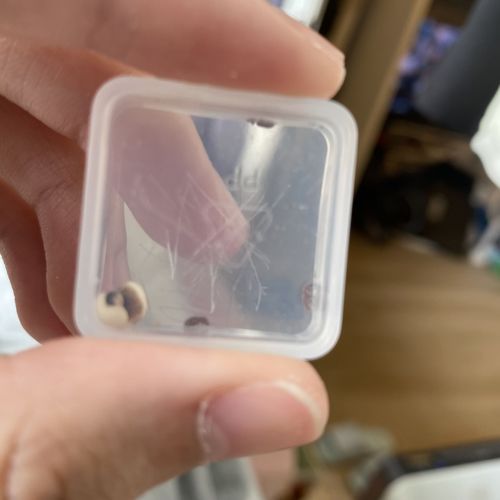
Cowpea Weevil
Callosobruchus maculatus
- Order & Family
- Order Coleoptera (Beetles), Family Chrysomelidae (Leaf Beetles)
- Size
- 3mm to 4.5mm in length.
Natural Habitat
Agricultural fields where legumes are grown and post-harvest storage facilities such as pantries, warehouses, and silos.
Diet & Feeding
Larvae develop inside and feed on the seeds of legumes, specifically cowpeas, mung beans, and black-eyed peas. Adults do not typically feed but may consume nectar or pollen.
Behavior Patterns
They exhibit a short life cycle (3-4 weeks in warm conditions). Females glue eggs to the surface of beans; upon hatching, larvae bore directly into the seed. They are known for 'polymorphism', having both a sedentary flightless form and a dispersive flying form triggered by high population density.
Risks & Benefits
They are major economic pests that cause significant weight loss and quality reduction in stored legume supplies. They pose no direct health risk or bite/sting threat to humans but can spoil entire batches of food.