
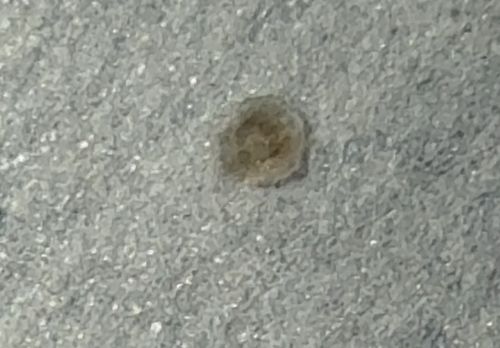
Community identification
Plaster Bagworm (or Household Casebearer)
Phereoeca uterella
- Order & Family
- Order: Lepidoptera, Family: Tineidae
- Size
- Larval case is usually 8–13 mm (approx. 0.3–0.5 inches) long.
Natural Habitat
Typically found indoors in humid climates, often on walls, ceilings, and in corners of closets or garages. They construct protective cases out of debris.
Diet & Feeding
The larva feeds on silk (spider webs), wool, lint, hair, dead insects, and dried animal matter. They do not eat plaster, despite the name.
Behavior Patterns
The larva drags its flat, pumpkin-seed-shaped case around as it moves. It can retreat inside the case at both ends if threatened. Before pupating, it attaches the case to a vertical surface.
Risks & Benefits
Generally harmless to humans (no biting or stinging). They are considered a minor household pest because they can damage natural fibers like wool or silk, but they also clean up spider webs and dead insects.