
Community identification
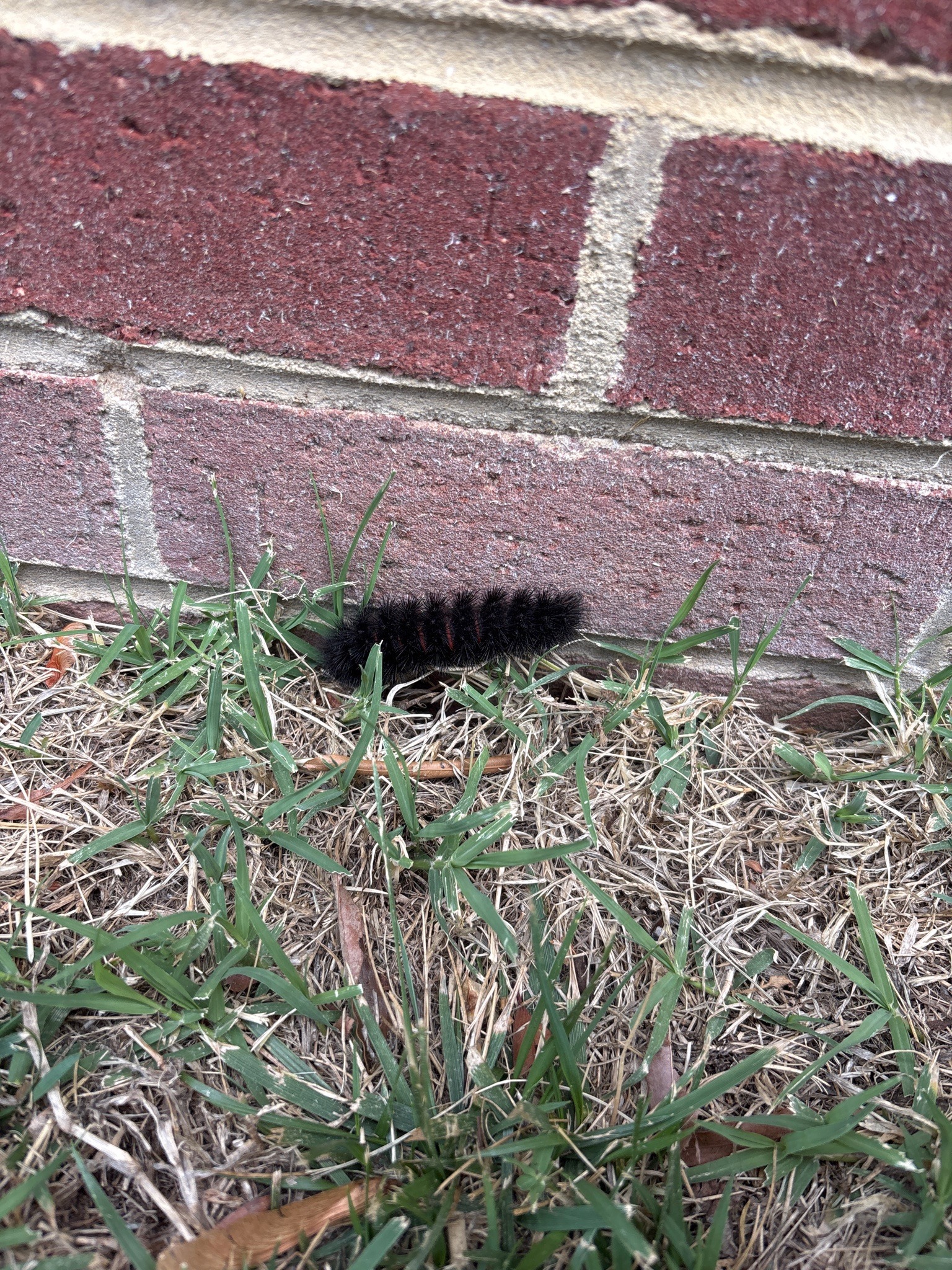
Giant Leopard Moth Caterpillar
Hypercompe scribonia
- Order & Family
- Lepidoptera: Erebidae
- Size
- 2 to 3 inches (50 to 75 mm) in length
Natural Habitat
Woodlands, farmlands, and gardens across North America from southern Canada to Florida and Texas
Diet & Feeding
Polyphagous; feeds on a variety of broad-leaf plants including dandelion, plantain, violets, honeysuckle, and many trees
Behavior Patterns
Nocturnal; they often overwinter as larvae beneath logs or leaf litter. When threatened, they roll into a tight ball, revealing bright red bands on their skin between the black bristles.
Risks & Benefits
Generally harmless to humans; unlike some fuzzy caterpillars, their bristles (setae) are not stinging/urticating. They are beneficial pollinators when they reach the adult moth stage.