
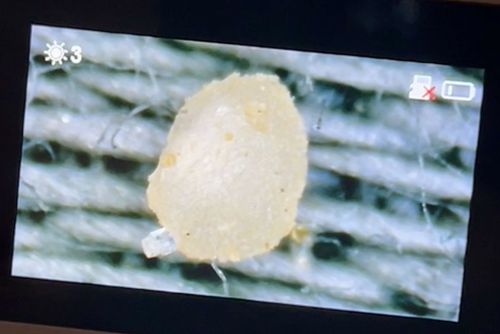
Community identification
Common Bed Bug (Egg)
Cimex lectularius
- Order & Family
- Order: Hemiptera, Family: Cimicidae
- Size
- Approximately 1 mm in length (roughly the size of two grains of salt).
Natural Habitat
Typically found in cracks and crevices near human sleeping areas, such as mattress seams, bed frames, and behind baseboards.
Diet & Feeding
The egg itself does not eat; however, once hatched, the nymph requires blood meals from warm-blooded hosts (primarily humans) to develop.
Behavior Patterns
Eggs are laid in clusters and glued to surfaces with a sticky substance. They typically hatch in 6 to 10 days depending on temperature. The life cycle involves five nymphal stages before reaching adulthood.
Risks & Benefits
Risks include physical reactions to bites (itching, welts), allergic reactions, and psychological distress. While they can carry pathogens, they are not known to effectively transmit diseases to humans. They offer no ecological benefits in a household setting.