
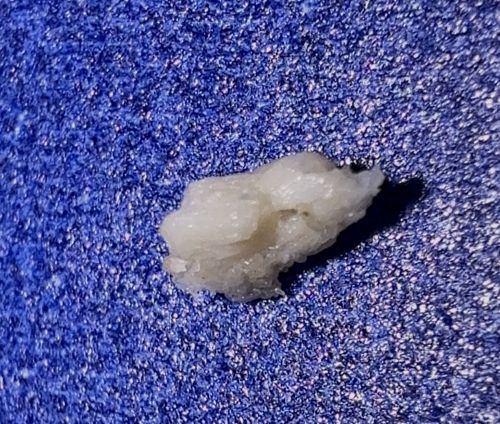
Mealybug wax / Mealybug secretion (Though visually ambiguous, it is often identified as part of a mealybug infestation or a Lacewing Larva carrying debris)
Pseudococcidae (Family) or Chrysopidae (Family - specifically 'Trash-carrying' Lacewing Larvae)
- Order & Family
- Order: Hemiptera, Family: Pseudococcidae (Mealybugs) OR Order: Neuroptera, Family: Chrysopidae (Green Lacewings)
- Size
- 1 to 4 mm (0.04 to 0.16 inches) for the individual insect, though the waxy secretion can make them appear larger.
Natural Habitat
Found on the stems, leaves, and undersides of foliage on a wide variety of houseplants, greenhouse plants, and outdoor vegetation, particularly in warm, humid environments.
Diet & Feeding
Mealybugs feed on plant sap (phloem), extracting nutrients and excreting sticky honeydew. Lacewing larvae are distinctive predators that eat aphids, mites, and mealybugs.
Behavior Patterns
This specific image likely shows either the waxy coating produced by a mealybug for protection or the debris camouflage collected by a Lacewing larva ('trash bug'). Mealybugs are sedentary, clustering in hidden crevices. 'Trash bugs' move actively but disguise themselves under white debris or the husks of their prey.
Risks & Benefits
Mealybugs are significant agricultural and horticultural pests that stunt plant growth and promote sooty mold. However, if this is a Lacewing larva, it is highly beneficial as a voracious predator of garden pests.