
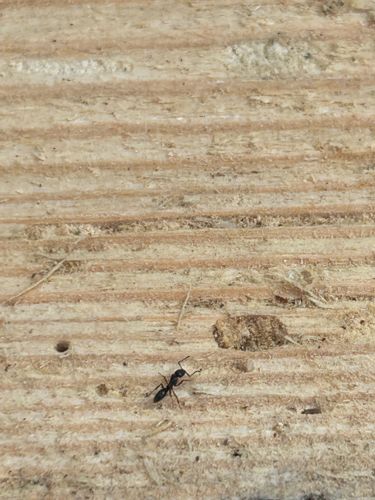
Community identification
Black Carpenter Ant
Camponotus pennsylvanicus
- Order & Family
- Order: Hymenoptera; Family: Formicidae
- Size
- Workers range from 6mm to 13mm; Queens can be up to 25mm in length.
Natural Habitat
Typically found in woodland areas, nesting in dead logs, stumps, or hollow trees; they frequently invade wooden structures, especially moisture-damaged wood.
Diet & Feeding
Omnivorous; they eat plant juices, honeydew from aphids, other insects, and protein or sugar-based food scraps in human homes. They do not eat wood.
Behavior Patterns
They are primarily nocturnal foragers. Unlike termites, they do not eat wood but excavate it to create smooth galleries for nesting. They exhibit complex social structures with a single queen.
Risks & Benefits
Risks include significant structural damage to homes and buildings if nests are left untreated. Benefits include their role as decomposers in nature, breaking down dead wood, and acting as a food source for other wildlife.