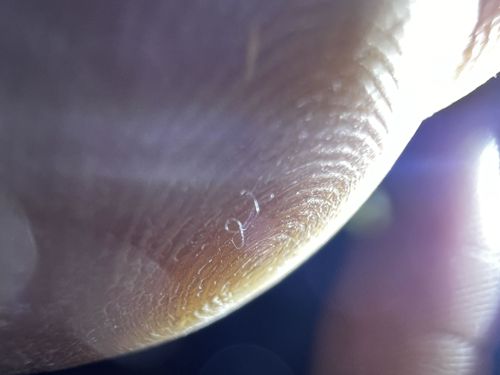
Pinworm (Threadworm)
Scientific Name: Enterobius vermicularis
Order & Family: Order: Oxyurida, Family: Oxyuridae
Size: Females: 8–13 mm long; Males: 2–5 mm long.
Natural Habitat
The human gastrointestinal tract, specifically the large intestine and rectum.
Diet & Feeding
Feeds on intestinal contents and mucosal secretions within the human host.
Behavior Patterns
Adult females migrate out of the anus at night to lay thousands of microscopic eggs on the surrounding skin, causing intense itching. The life cycle continues when eggs are accidentally ingested through contaminated hands, surfaces, or food.
Risks & Benefits
Risks: Causes enterobiasis, characterized by perianal itching, sleep disruption, and irritability. While generally not dangerous, it is highly contagious. Benefits: None to the host; it is an obligate parasite.
Identified on: 2/20/2026