
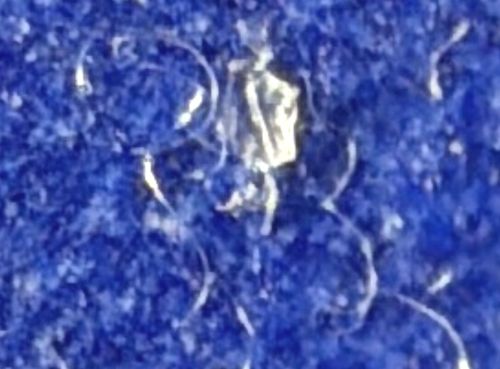
Clothing Moth Larva (specifically the Case-bearing Clothes Moth)
Tinea pellionella
- Order & Family
- Order: Lepidoptera, Family: Tineidae
- Size
- Larvae are roughly 7mm to 10mm (about 1/4 to 1/2 inch) in length.
Natural Habitat
Typically found indoors in dark, undisturbed areas like closets, drawers, under carpets, or in fabric crevices. They thrive where natural fibers like wool, silk, fur, or animal hair are present.
Diet & Feeding
The larvae feed on keratin-rich natural fibers, including wool, fur, silk, feathers, carpets, felt, and sometimes synthetic fabrics blended with natural fibers or stained with food.
Behavior Patterns
The most distinguishing behavior is that the larva spins a protective silken case around itself, which it carries around as it feeds and moves. They add bits of fiber and debris to camouflage the case. They avoid light and are rarely seen unless an infestation is disturbed.
Risks & Benefits
Risks: They are a significant household pest that causes damage to clothing, carpets, tapestries, and taxidermy. They do not bite or spread disease to humans. Benefits: In nature, they help break down animal matter like fur and feathers, playing a minor role in nutrient recycling.