
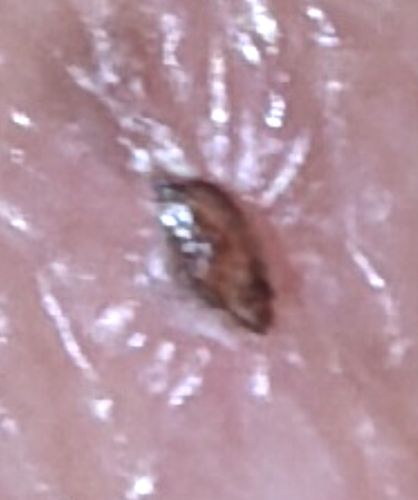
Tungiasis (Infection by the Chigoe Flea or Jigger)
Tunga penetrans
- Order & Family
- Order: Siphonaptera, Family: Tungidae
- Size
- Approximately 1 mm (less than 1/16 inch) when unfed; the female abdomen can expand up to 1 cm (almost 1/2 inch) after burrowing into the skin and producing eggs.
Natural Habitat
Found in tropical and sub-tropical climates, particularly in Central and South America, the Caribbean, and sub-Saharan Africa. They thrive in dry, sandy soil and dust near human habitation.
Diet & Feeding
Both males and females feed on the blood of mammals. Only the impregnated female burrows into the skin for reproduction.
Behavior Patterns
Unlike other fleas that bite and leave, the fertilized female Tunga penetrans burrows head-first into the host's skin (usually feet or toes), leaving only the posterior end exposed for breathing and excretion. She engorges on blood, swells significantly with eggs, releases them into the environment, and eventually dies and is sloughed off.
Risks & Benefits
This is a parasitic insect causing Tungiasis. Risks include intense itching, pain, severe inflammation, secondary bacterial infections (like tetanus or gangrene), difficulty walking, and loss of toenails. There are no ecological benefits; it is a significant public health nuisance in endemic poverty-stricken areas.