
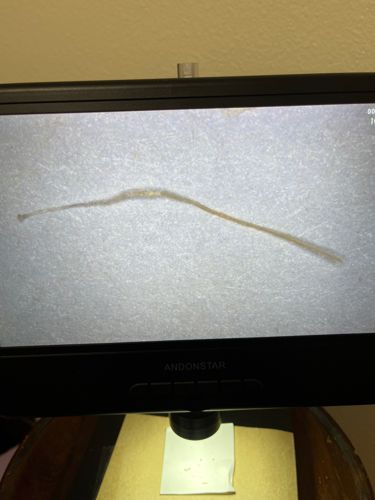
Horsehair worm
Gordius aquaticus (example species, identification to species level from image is difficult)
- Order & Family
- Nematomorpha, Gordiidae
- Size
- Usually 10-50 cm, but can reach up to 2 meters in length. They are very thin, often less than 1 mm in diameter.
Natural Habitat
Typically found in freshwater environments (ponds, ditches, puddles, troughs, streams) as adults, while juveniles are parasitic in arthropods (e.g., crickets, grasshoppers, beetles, cockroaches).
Diet & Feeding
Adult horsehair worms do not feed. They live off nutrients accumulated during their parasitic larval stage. Larvae are parasitic on arthropods, absorbing nutrients from their host's hemocoel.
Behavior Patterns
Adults are free-living and aquatic, often found writhing slowly in water. They are known for emerging from their insect hosts (often causing the host to seek water) to reproduce. Their life cycle involves eggs laid in water, larvae infecting hosts, development within the host, and then emerging again as adults in water.
Risks & Benefits
No known risks to humans, pets, or plants. They are not parasites of vertebrates or plants. Their primary ecological role is as parasites of arthropods, which can sometimes influence insect populations. Generally considered harmless.