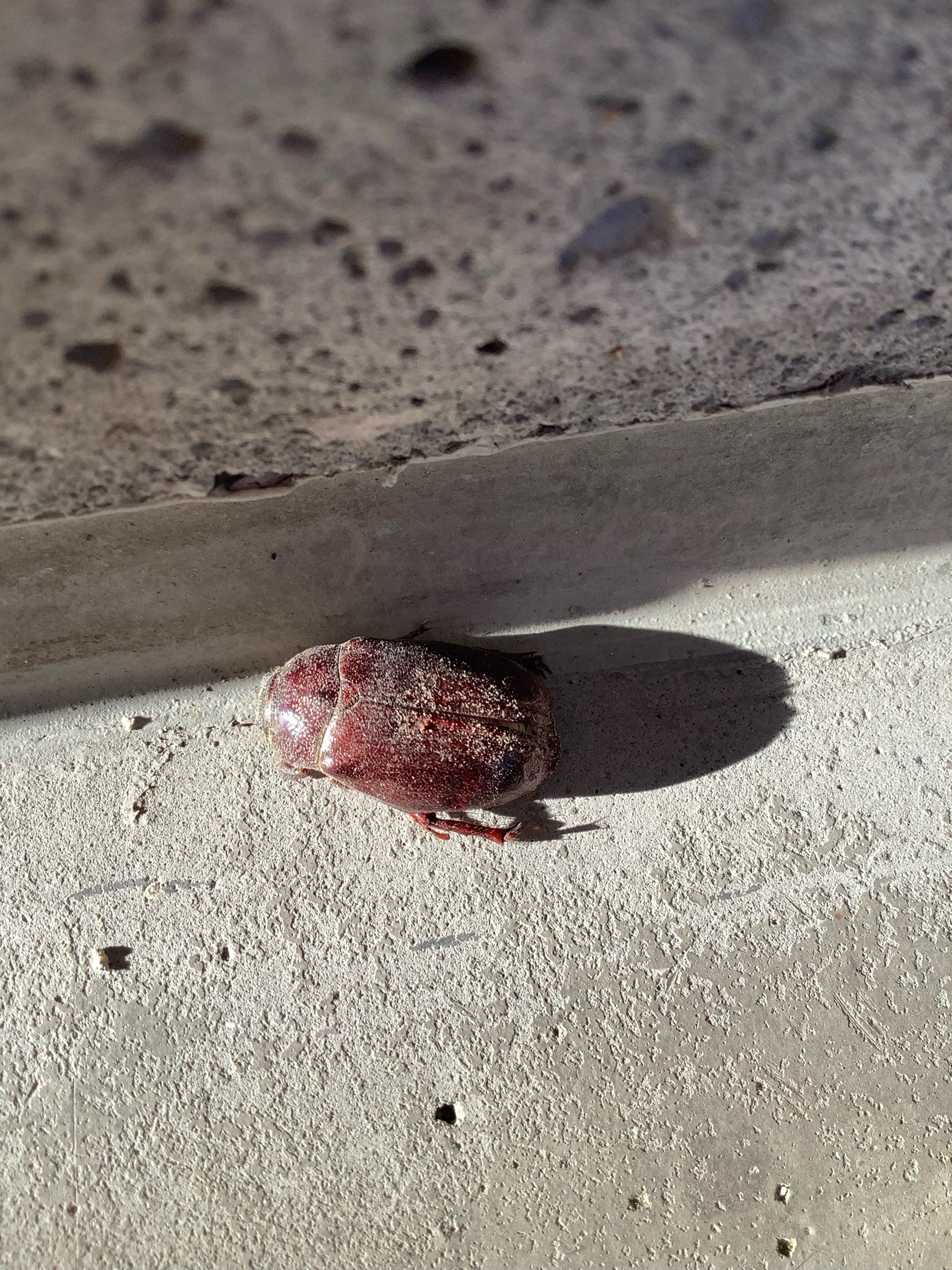
May Beetle (or June Bug)
Scientific Name: Phyllophaga
Order & Family: Coleoptera: Scarabaeidae
Size: 12 to 25 mm (0.5 to 1.0 inch) in length
Natural Habitat
Found in lawns, pastures, and gardens, as well as near deciduous trees and shrubs.
Diet & Feeding
Adults feed on the foliage of trees and shrubs at night. Larvae (grubs) live in the soil and feed on the roots of grasses and ornamental plants.
Behavior Patterns
Nocturnal insects that are strongly attracted to bright lights. They typically emerge in late spring or early summer to mate before females return to the soil to lay eggs.
Risks & Benefits
Generally harmless to humans but can be a nuisance around lights. Larvae can cause significant damage to turfgrass and some crops, though they are an important food source for birds and small mammals.
Identified on: 6/21/2026