
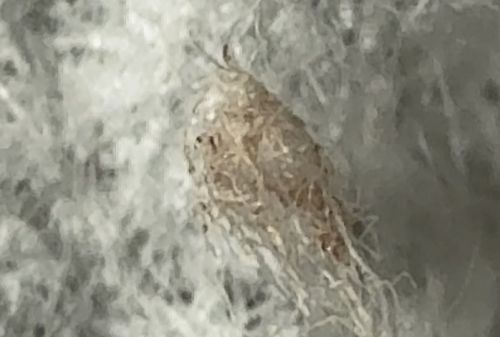
Household Casebearer (often confused with Clothes Moth Larva)
Phereoeca uterella or Phereoeca allutella
- Order & Family
- Order: Lepidoptera, Family: Tineidae
- Size
- Usually 8-13 mm (0.3 to 0.5 inches) long inside their case.
Natural Habitat
Typically found indoors in dry, dusty areas of homes, particularly on walls, baseboards, under furniture, or near spider webs where they can find debris.
Diet & Feeding
They feed on various fibrous materials including old spider webs, wool, hair, debris, insect remains, and sometimes synthetic fabrics if mixed with organic material.
Behavior Patterns
The larva constructs a silken case shaped like a flattened pumpkin seed or violin, which it drags around as it moves. It withdraws into the shell at both ends when threatened. This covering is camouflaged with sand, dust, frass (insect droppings), and fibers from its environment.
Risks & Benefits
Risks: Generally considered a minor household pest. While related to clothes moths, they are less destructive to textiles but can still graze on woolen clothing or rugs. They do not bite or sting humans. Benefits: They act as cleaners of minor organic debris and old spider webs in neglected corners.