Trypanosoma cruzi
Scientific Name: Trypanosoma cruzi
Order & Family: Kinetoplastida, Trypanosomatidae
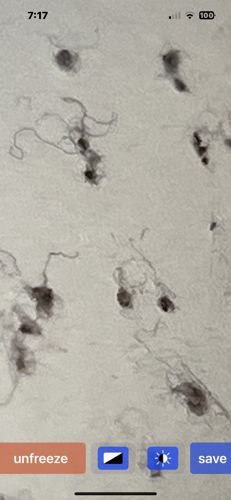
Size: Epimastigote form: 20-40 µm in length; Trypomastigote form: 15-20 µm in length
Natural Habitat
Infects mammalian hosts (including humans) and various insect vectors, especially triatomine bugs. Found in rural and suburban areas of the Americas, particularly Latin America.
Diet & Feeding
Parasitic; consumes nutrients from the host's cells and bodily fluids.
Behavior Patterns
T. cruzi has a complex life cycle involving an insect vector (triatomine bug) and a mammalian host. In mammals, it replicates intracellularly in various tissues (e.g., muscle, nerve cells) as amastigotes, then transforms into trypomastigotes that circulate in the bloodstream. In the insect vector, it multiplies as epimastigotes in the midgut and transforms into infective metacyclic trypomastigotes in the hindgut.
Risks & Benefits
Potential risk: Causes Chagas disease (American trypanosomiasis), a potentially life-threatening illness. Acute phase may be asymptomatic or mild, but chronic phase can lead to severe heart (cardiomyopathy) and digestive system (megaesophagus, megacolon) damage. There are no known benefits of T. cruzi to humans or the ecosystem, as it is a pathogen.
Identified on: 12/3/2025