
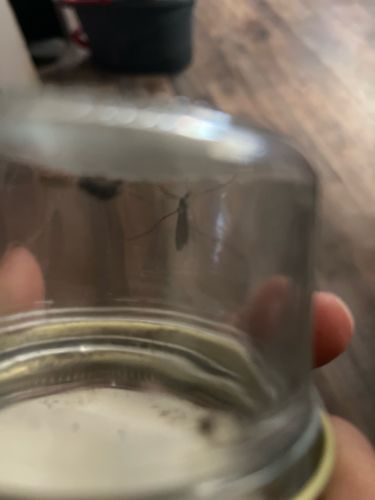
Community identification
Crane Fly
Tipulidae (family name)
- Order & Family
- Order: Diptera; Family: Tipulidae
- Size
- Varies by species; typically 2 to 60 mm in length with a leg span up to 10 cm.
Natural Habitat
Found globally in moist areas such as woodlands, meadows, and gardens; larvae are often found in wet soil or aquatic environments.
Diet & Feeding
Adults often do not eat at all or feed on nectar/pollen; larvae (known as 'leatherjackets') eat decaying organic matter or plant roots.
Behavior Patterns
Weak flyers known for their long, fragile legs that break off easily; they are attracted to lights at night and have a short adult lifespan of only a few days focused on mating.
Risks & Benefits
Harmless to humans as they do not bite or sting. Larvae can occasionally be lawn pests by eating roots, but they benefit the ecosystem by breaking down organic matter and serving as a food source for birds and bats.