
Community identification
Human Botfly
Dermatobia hominis
- Order & Family
- Order: Diptera, Family: Oestridae
- Size
- Larvae can grow up to 18-24 mm in length inside the host's skin; adults are about 12-18 mm.
Natural Habitat
Tropical and subtropical regions of Central and South America, particularly in humid lowland forests.
Diet & Feeding
Larvae (maggots) are parasitic and feed on the living tissue and fluids of mammals, including humans. Adults have vestigial mouthparts and do not feed.
Behavior Patterns
Adults capture blood-sucking insects (like mosquitoes) and attach eggs to them. When the carrier insect bites a host, the botfly larvae hatch and burrow into the host's skin to develop through three instars before dropping out to pupate in the soil.
Risks & Benefits
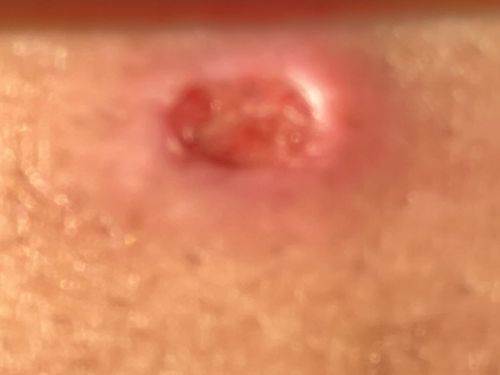
Causes myiasis, characterized by a painful, discharging boil-like lesion (as seen in the image). It can lead to secondary infections. It provides no direct benefit to humans and is considered a parasite.