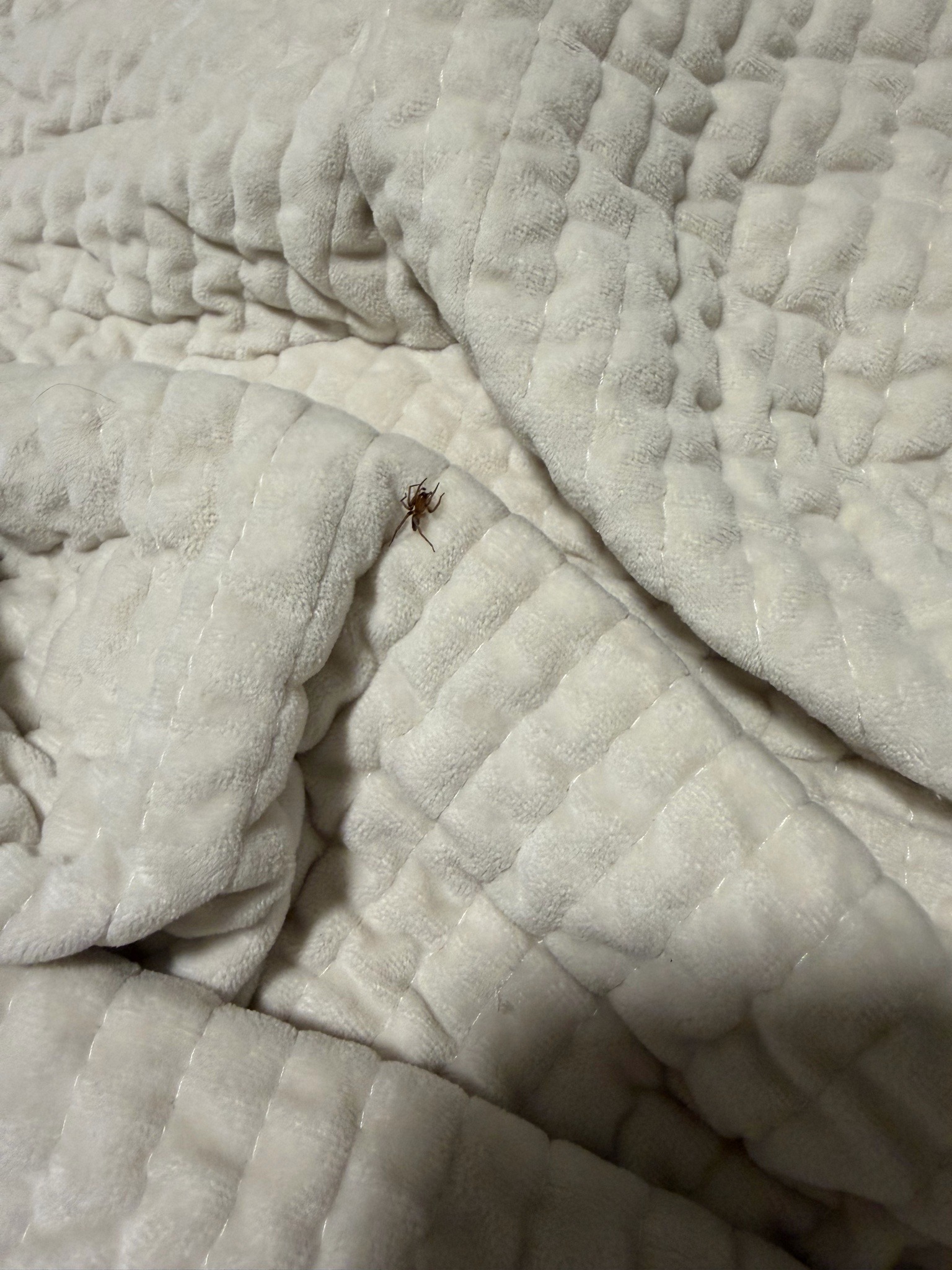
Woodlouse Hunter
Scientific Name: Dysdera crocata
Order & Family: Araneae, Dysderidae
Size: 11–15 mm (0.43–0.59 in) for females, males are slightly smaller.
Natural Habitat
Damp, dark places like under logs, rocks, leaf litter, and occasionally inside homes in basements or bathrooms.
Diet & Feeding
Strictly carnivorous; specialized to hunt and eat woodlice (pill bugs) using their large chelicerae to pierce hard exoskeletons.
Behavior Patterns
Nocturnal ground hunters that do not build webs to catch prey. They utilize silk to create retreat sacs for resting and molting.
Risks & Benefits
Generally beneficial as they control pest populations. While they can bite humans if handled, their venom is not medically significant, though the bite may cause localized itchiness or pain due to the size of the fangs.
Identified on: 6/17/2026