
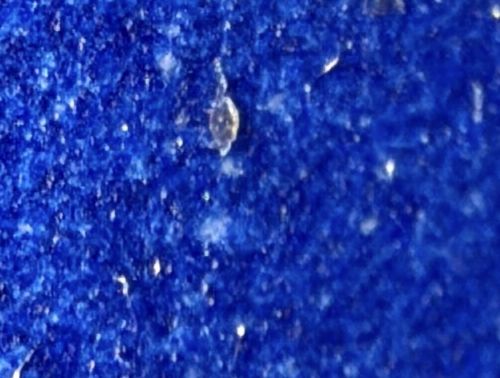
Dust Mite (or similar microscopic mite)
Dermatophagoides spp. (e.g., Dermatophagoides farinae or Dermatophagoides pteronyssinus)
- Order & Family
- Order: Sarcoptiformes; Family: Pyroglyphidae
- Size
- Microscopic, typically measuring between 0.2 to 0.3 millimeters in length. They are barely visible against the dark background but usually invisible to the naked eye.
Natural Habitat
Typically found indoors in warm, humid environments, thriving in bedding, mattresses, upholstered furniture, and carpets where skin flakes accumulate.
Diet & Feeding
They feed primarily on dead skin cells (dander) shed by humans and pets, as well as fungal spores.
Behavior Patterns
Dust mites do not bite or sting. They tend to congregate in high-traffic resting areas like beds, and they require humidity to survive because they absorb moisture from the air rather than drinking water.
Risks & Benefits
Risks: A major source of indoor allergens; their feces and decaying body parts can trigger asthma attacks, sneezing, and allergic rhinitis in sensitive individuals. Benefits: They act as decomposers of organic waste (dead skin) on a micro scale, though this 'benefit' is usually outweighed by their role as allergens in homes.