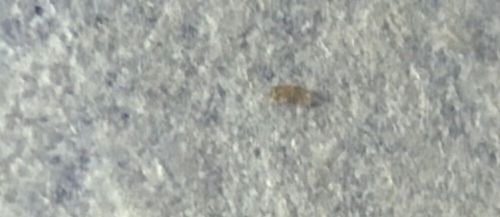
Booklouse (or Psocid)
Scientific Name: Liposcelis spp. (Common household genus)
Order & Family: Psocodea; Liposcelididae
Size: Very small, typically 1 to 2 mm in length.
Natural Habitat
Found in warm, damp environments with high humidity like bathrooms, kitchens, basements, wall voids, around windows, and in stored food products or old books/paper.
Diet & Feeding
Feeds on microscopic molds, fungi, starch, glue (from book bindings), and sometimes stored food products like grains or flour.
Behavior Patterns
They are flightless insects that run quickly across surfaces when disturbed. They thrive in humidity and reproduce rapidly in damp conditions, often indicating a moisture issue in the home.
Risks & Benefits
Generally considered a nuisance pest rather than dangerous. They do not bite humans or transmit diseases, but large populations can contaminate food supplies and are a sign of excessive moisture or mold growth.
Identified on: 2/26/2026