
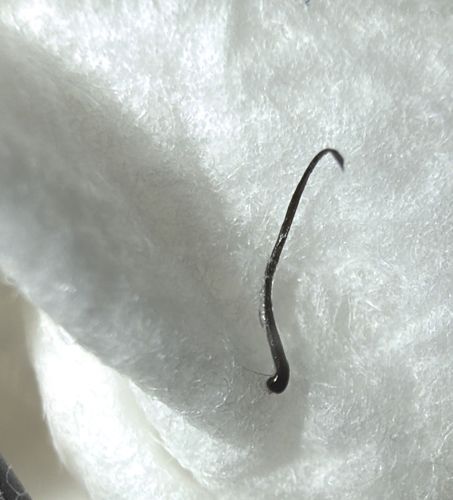
Horsehair Worm (also known as Gordian Worm)
Gordius species (Phylum Nematomorpha)
- Order & Family
- Order: Gordioidea, Family: Gordiidae
- Size
- Generally quite long and very thin, often ranging from 4 to 14 inches (10-35 cm) or more, with a diameter of only about 1 mm.
Natural Habitat
Adults are aquatic, found in puddles, water troughs, ponds, streams, and sometimes damp soil. Larvae are parasitic inside terrestrial insects like crickets, grasshoppers, and beetles.
Diet & Feeding
Larvae are internal parasites that absorb nutrients from their insect hosts (typically crickets, cockroaches, beetles). Adults do not feed; their primary purpose is reproduction.
Behavior Patterns
They exhibit a parasitic life cycle. The larvae infect a host (an insect), grow inside it, and manipulate the host's behavior to seek water. Once the host enters water, the adult worm emerges (often killing the host or leaving it sterile) to mate. They often writhe and knot themselves into complex tangles, hence the name 'Gordian Worm'.
Risks & Benefits
Risks: Harmless to humans and pets. They cannot infect mammals. They can be alarming to see due to their strange appearance. Benefits: They are natural biocontrol agents, helping to regulate populations of pest insects like crickets, grasshoppers, and cockroaches.