
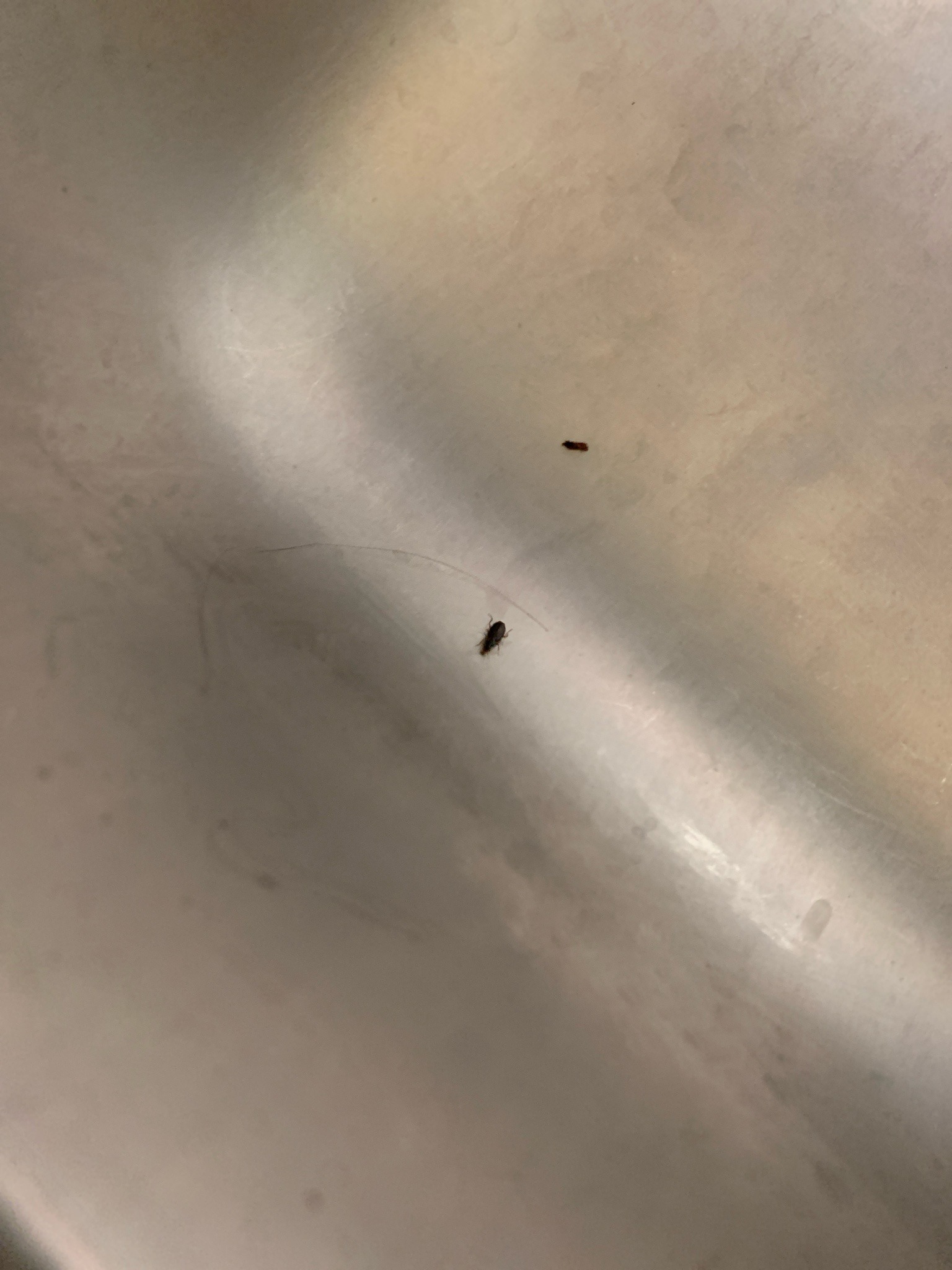
Flea
Ctenocephalides felis (most likely)
- Order & Family
- Order: Siphonaptera, Family: Pulicidae
- Size
- 1.5 to 3.3 millimeters (approximately 1/16 to 1/8 inch) in length.
Natural Habitat
Widely distributed indoors and outdoors, typically found on mammalian hosts (especially cats and dogs) or in their bedding, carpets, and cracks in floors.
Diet & Feeding
Adults are hematophagous, meaning they feed exclusively on the blood of mammals or birds. Larvae feed on organic debris and the protein-rich feces of adult fleas (known as flea dirt).
Behavior Patterns
Fleas are wingless, laterally flattened jumpers that can leap many times their body length. They are primarily nocturnal or active in low light. Their life cycle consists of egg, larva, pupa, and adult stages, often triggered by host presence (heat, carbon dioxide, or vibration).
Risks & Benefits
Risks include painful, itchy bites that can lead to allergic dermatitis and secondary infections. They are significant vectors for diseases such as murine typhus and plague, and can transmit tapeworms if ingested by a host. They offer no notable benefits to humans or pets and are generally considered household pests.