Crab Louse (Pubic Louse)
Scientific Name: Pthirus pubis
Order & Family: Order: Phthiraptera, Family: Pthiridae
Size: 1.1 to 1.8 mm (about the size of a pinhead), distinctively smaller than head or body lice.
Natural Habitat
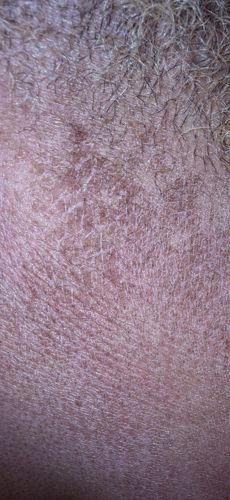
Exclusively inhabits coarse human hair, most commonly found in the pubic region, but occasionally in eyelashes, eyebrows, armpits, or facial hair.
Diet & Feeding
Hematophagous; feeds exclusively on human blood by biting the skin.
Behavior Patterns
These are obligate parasites that spend their entire life cycle on the host. They are less active than head lice and tend to anchor themselves firmly to a single hair strand while feeding. They are transmitted primarily through direct intimate contact.
Risks & Benefits
Risks: Causes intense itching (pruritus) and skin irritation (pediculosis pubis). Scratching can lead to secondary bacterial skin infections. They do not generally transmit diseases, unlike body lice. Benefits: None.
Identified on: 3/1/2026