
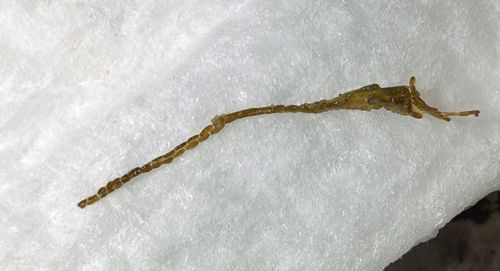
Rat-tailed Maggot
Eristalis tenax (larval stage)
- Order & Family
- Order: Diptera (Flies), Family: Syrphidae (Hoverflies)
- Size
- Body is typically 15–20 mm long; the distinctive 'tail' (breathing tube) can extend up to 150 mm (6 inches) depending on water depth.
Natural Habitat
Found in stagnant, oxygen-depleted water rich in organic decaying matter, such as sewage lagoons, manure pits, drains using septic tanks, and wet compost heaps.
Diet & Feeding
They are filter feeders involving saprophagy; they feed on decaying organic material and bacteria found in polluted water.
Behavior Patterns
The most notable feature is their telescopic breathing tube (siphon) which acts like a snorkel, allowing the larva to breathe atmospheric air while submerged in low-oxygen environments. In the pupal stage, they leave the water to find a drier location.
Risks & Benefits
Benefits: They are important decomposers in aquatic ecosystems. The adult form (Drone Fly) is a significant pollinator. Risks: Generally harmless to humans, but accidental ingestion can rarely cause intestinal myiasis. Their presence indicates high levels of water pollution or sewage issues.