
Community identification
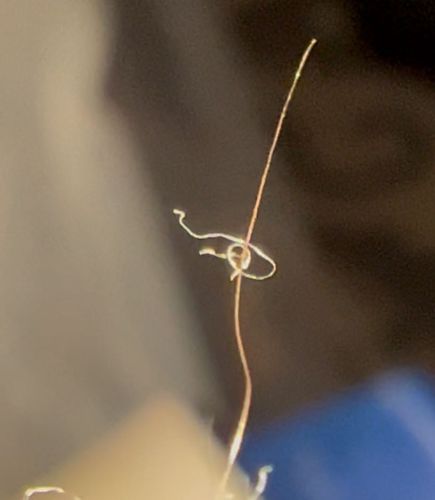
Horsehair worm
Gordius robustus (and other species within the Phylum Nematomorpha)
- Order & Family
- Order Gordioidea, Family Gordiidae
- Size
- Generally 4 inches to 14 inches (10–35 cm) long, but very thin (usually 1 mm or less in diameter).
Natural Habitat
Adults live in freshwater environments like ponds, streams, and puddles; larvae are parasitic within terrestrial insects.
Diet & Feeding
Adults do not eat; they rely on stored nutrients. Larvae are parasites that absorb nutrients from their insect hosts (like crickets or beetles).
Behavior Patterns
They exhibit a dramatic parasitic life cycle where they manipulate the host's behavior, compelling the host to seek water and jump in. Once the host is in the water, the adult worm emerges to mate.
Risks & Benefits
They pose no risk to humans, pets, or livestock. They are beneficial for the ecosystem as they help control populations of certain insects like crickets and grasshoppers.