
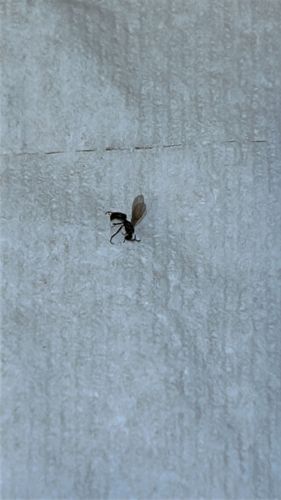
Community identification
Carpenter Ant (Winged Alate)
Camponotus spp.
- Order & Family
- Hymenoptera: Formicidae
- Size
- 1/4 to 3/4 inch (6mm to 19mm)
Natural Habitat
Decaying wood, hollow logs, tree stumps, and structural timbers of buildings frequently near moisture sources.
Diet & Feeding
Opportunistic feeders; they consume protein (dead insects) and carbohydrates (honeydew from aphids, nectar, and sweet household scraps). They do not eat wood.
Behavior Patterns
Crepuscular or nocturnal. This winged individual is a reproductive (alate) produced for a nuptial flight to establish new colonies. They excavate 'galleries' in wood for nesting which can cause structural damage.
Risks & Benefits
Risks include potential structural damage to homes if nests are established in wooden supports. Benefits include aerating soil and breaking down decaying forest timber. They can bite if handled but do not sting.