
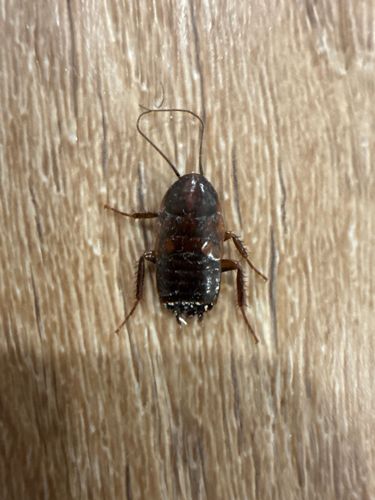
Australian Cockroach (Nymph)
Periplaneta australasiae
- Order & Family
- Order: Blattodea, Family: Blattidae
- Size
- Nymphs are smaller than the 1.25 to 1.5-inch (32-35 mm) adults, appearing wingless and broad with distinct yellow segments on the thorax.
Natural Habitat
Typically found in tropical and subtropical climates, preferring warm, moist areas like under bark, in tree holes, or leaf litter. Indoors, they may be found in greenhouses or high-humidity areas like pipes or basements.
Diet & Feeding
Omnivorous and opportunistic scavengers; they eat decaying organic matter, fungi, starchy items like book bindings, and household food scraps.
Behavior Patterns
Nocturnal and highly active; nymphs undergo several molts before reaching maturity. While they prefer the outdoors, they will enter buildings during rain or to find food, hiding in crevices during the day.
Risks & Benefits
They do not bite but are considered pests because they can carry pathogens, contaminate food, and produce allergens that trigger asthma. In the ecosystem, they are beneficial decomposers that recycle organic nutrients.