
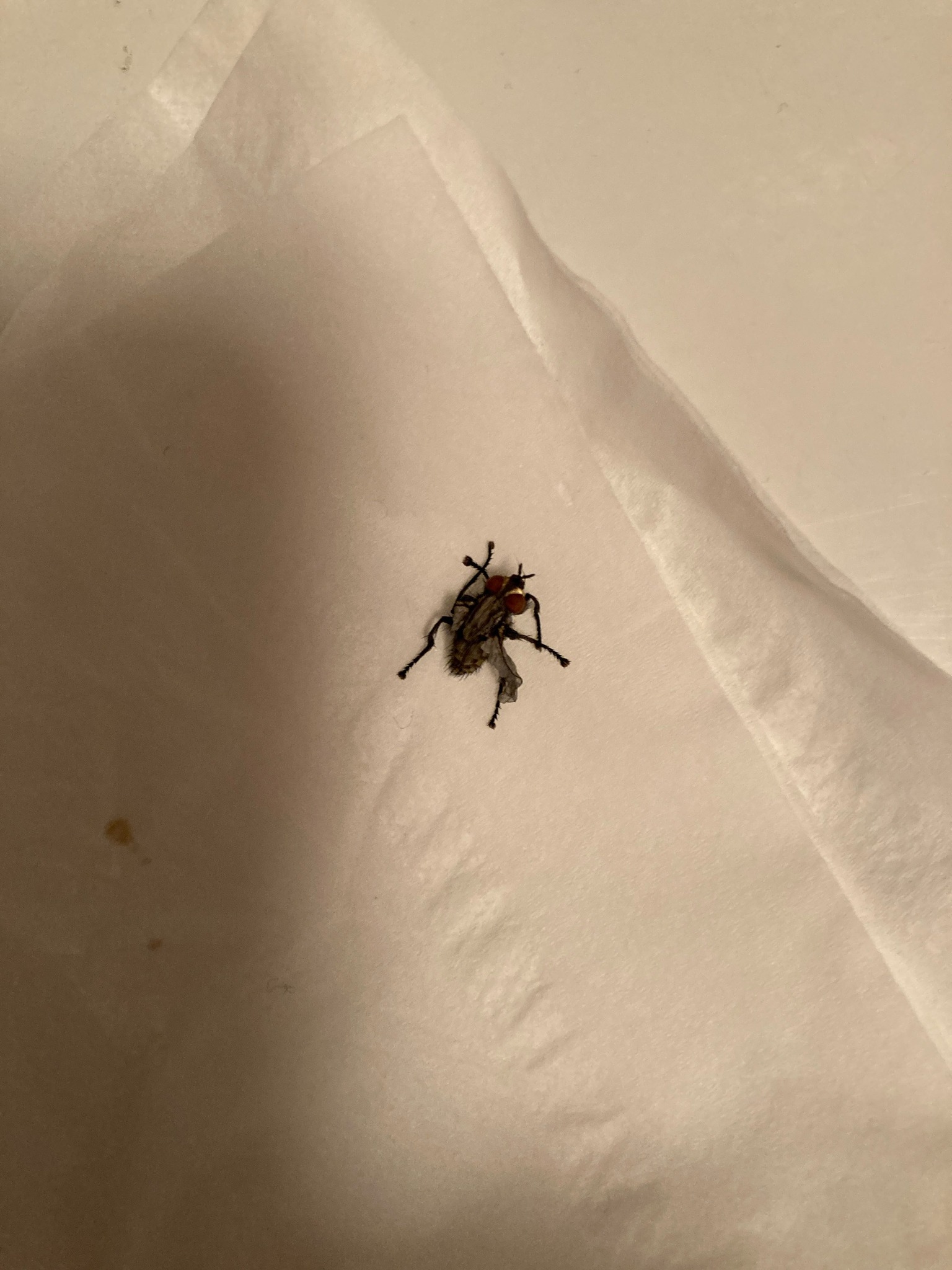
Flesh Fly
Sarcophaga spp.
- Order & Family
- Order Diptera, Family Sarcophagidae
- Size
- Generally 8 to 16 mm (0.31 to 0.63 in) in length.
Natural Habitat
Found worldwide in most habitats, particularly near carrion, animal waste, and urban environments.
Diet & Feeding
Adults feed on sugary liquids like nectar or fruit juices. Larvae (maggots) typically feed on decaying organic matter, animal carcasses, or open wounds on living animals.
Behavior Patterns
Unlike many flies that lay eggs, flesh flies are ovoviviparous, meaning the eggs hatch inside the female and she deposits live larvae directly onto a food source. They are fast fliers and often identified by the three dark longitudinal stripes on their thorax.
Risks & Benefits
Risks include the potential transmission of pathogens from waste to human food and causing myiasis in animals. Ecosystem benefits include their role as decomposers and scavengers that help cycle nutrients back into the soil.