
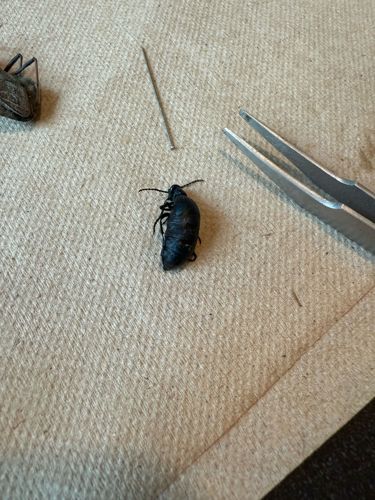
Darkling beetle / Ironclad beetle (likely a species of Tenebrionidae)
Family Tenebrionidae (specific genus and species cannot be determined from the image alone)
- Order & Family
- Order Coleoptera, Family Tenebrionidae
- Size
- Typically 2 mm to 40 mm, though the individual in the image appears to be in the larger end of this range, possibly around 15-25 mm.
Natural Habitat
Highly varied, depending on the species. Many are found in dry environments (deserts, arid regions), under logs, stones, or bark, in decaying wood, or associated with stored grains and other food products.
Diet & Feeding
Mostly detritivores, feeding on decaying plant material, fungi, and sometimes animal matter. Some species are omnivorous, consuming seeds, grains, or other stored food products. A few are predatory.
Behavior Patterns
Many species are nocturnal. They are known for their hard, often dark exoskeletons, which give them the common name 'ironclad beetles' due to their ability to withstand pressure. Some species exhibit defensive behaviors like playing dead or secreting noxious chemicals.
Risks & Benefits
Generally beneficial as decomposers in ecosystems, helping to break down organic matter. Some species, like mealworms (Tenebrio molitor), are raised as food for pets or humans. However, certain species can be considered pests in agriculture or households if they infest stored grains, flour, or other dried food products.