
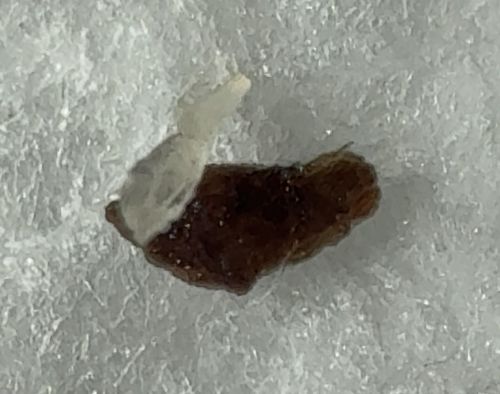
Case-bearing Clothes Moth (Larva)
Tinea pellionella
- Order & Family
- Order: Lepidoptera, Family: Tineidae
- Size
- Larvae are roughly 1/4 to 1/2 inch (6-12 mm) long. The adult moth is small, with a wingspan of about 1/2 inch.
Natural Habitat
Found indoors in darkened areas such as closets, wardrobes, under furniture, or in carpets. Nests within fabrics, especially wool, fur, silk, and felt.
Diet & Feeding
The larvae feed on keratin-rich animal fibers including wool, hair, fur, feathers, and silk. They will also eat accumulated dust and pet hair found in corners or under furniture.
Behavior Patterns
The larva constructs a silken case around itself, which it camouflages with bits of fibers and debris from its environment. It drags this protective case along as it feeds. Unlike the webbing clothes moth, this species rarely spins webs on the fabric surface.
Risks & Benefits
They pose no direct physical risk to humans (they do not bite or sting) but are considered a significant household pest. Their feeding habits can cause permanent damage to expensive clothing, rugs, upholstery, and natural fiber textiles. They offer no significant ecosystem benefit in a home environment.