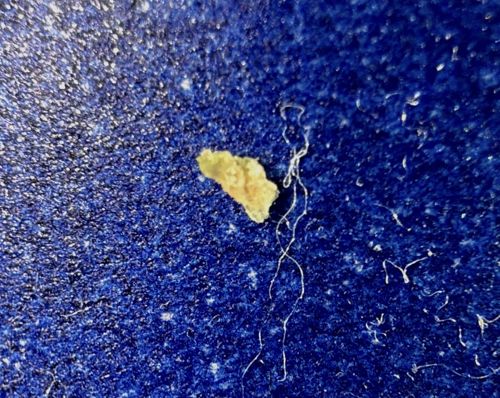
Tapeworm Segment (Proglottid)
Scientific Name: Dipylidium caninum (most common dog/cat tapeworm)
Order & Family: Order: Cyclophyllidea, Family: Dipylidiidae
Size: Segments are typically 3-12 mm long, resembling a grain of rice or a cucumber seed when fresh, or a sesame seed when dried.
Natural Habitat
Adults live in the small intestines of dogs and cats; segments are found in pet bedding, feces, or around the anal area.
Diet & Feeding
Absorbs nutrients directly through its skin (tegument) from the host's digestive contents; it has no digestive tract of its own.
Behavior Patterns
The adult worm sheds these segments containing egg packets, which exit the host via the anus. The segments are motile when fresh and can crawl around the perianal area, causing itching.
Risks & Benefits
Risks: Parasitic infection in pets causing weight loss and anal irritation. Humans (especially children) can be infected if they accidentally ingest an infected flea, though this is rare. Benefits: None.
Identified on: 2/7/2026