
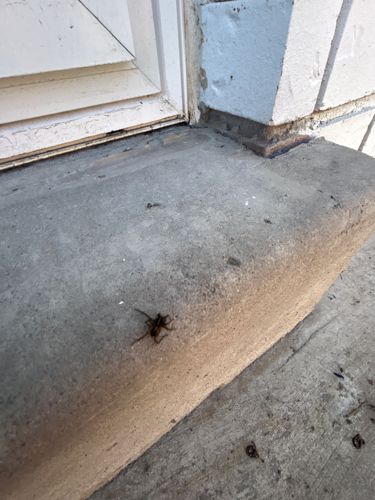
Community identification
Wolf Spider
Lycosa spp. (Family Lycosidae)
- Order & Family
- Order Araneae, Family Lycosidae
- Size
- 10 mm to 35 mm (0.4 to 1.38 inches) in body length, excluding legs.
Natural Habitat
Found globally in many habitats, commonly in gardens, leaf litter, grassy areas, and occasionally inside homes near baseboards or doors.
Diet & Feeding
Carnivorous; they are solitary hunters that eat ground-dwelling insects, other spiders, and sometimes small invertebrates.
Behavior Patterns
Unlike most spiders, they do not spin webs to catch prey; they hunt with speed and agility. Mothers are known for carrying their egg sacs attached to their spinnerets and later carrying spiderlings on their backs.
Risks & Benefits
Benefits include controlling pest insect populations. They are generally not aggressive to humans and their venom is not medically significant, though a bite may cause mild pain or swelling equivalent to a bee sting.