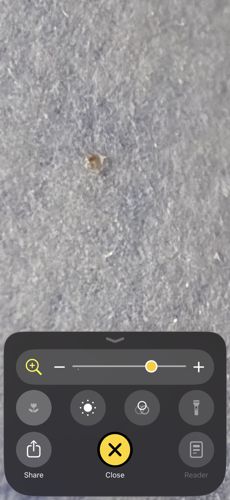
Body Louse / Head Louse
Scientific Name: Pediculus humanus
Order & Family: Order: Psocodea, Family: Pediculidae
Size: 2.0 mm to 3.5 mm in length
Natural Habitat
External surfaces of the human body, specifically hair, scalp, or clothing seams.
Diet & Feeding
Obligate hematophagy (feeds exclusively on human blood) several times a day.
Behavior Patterns
They are wingless and cannot jump; they move by crawling. They undergo incomplete metamorphosis with three nymphal stages. Females attach eggs (nits) to hair shafts or clothing fibers.
Risks & Benefits
Causes intense itching and skin irritation (pediculosis). Body lice (Pediculus humanus humanus) are significant vectors for diseases such as epidemic typhus, trench fever, and louse-borne relapsing fever. They offer no ecological benefit to humans.
Identified on: 1/4/2026