
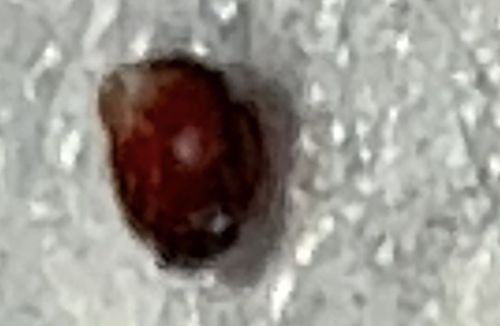
Community identification
Tick (likely a localized nymph or adult stage, difficult to specify exact species from image)
Ixodida (Order)
- Order & Family
- Order: Ixodida; Family: Ixodidae (Hard Ticks) or Argasidae (Soft Ticks)
- Size
- Before feeding (unengorged): 3 to 5 mm (apple seed size). After feeding (engorged): Can swell up to 10-15 mm.
Natural Habitat
Tall grass, wooded areas, leaf litter, and shrubs. They attach to hosts (mammals, birds, reptiles) passing through these environments.
Diet & Feeding
Hematophagous (bloodsuckers). They feed exclusively on the blood of mammals, birds, reptiles, and amphibians.
Behavior Patterns
They exhibit 'questing' behavior—climbing to the tips of grass or leaves and extending their front legs to grab onto a passing host. They have distinct life stages (larva, nymph, adult) requiring a blood meal to progress to the next.
Risks & Benefits
Risks: Major vectors for disease, including Lyme disease, Rocky Mountain spotted fever, and ehrlichiosis. Bites can cause allergic reactions. No significant ecosystem benefits other than serving as food for some birds and reptiles.